Toward Brain-Inspired Intelligence
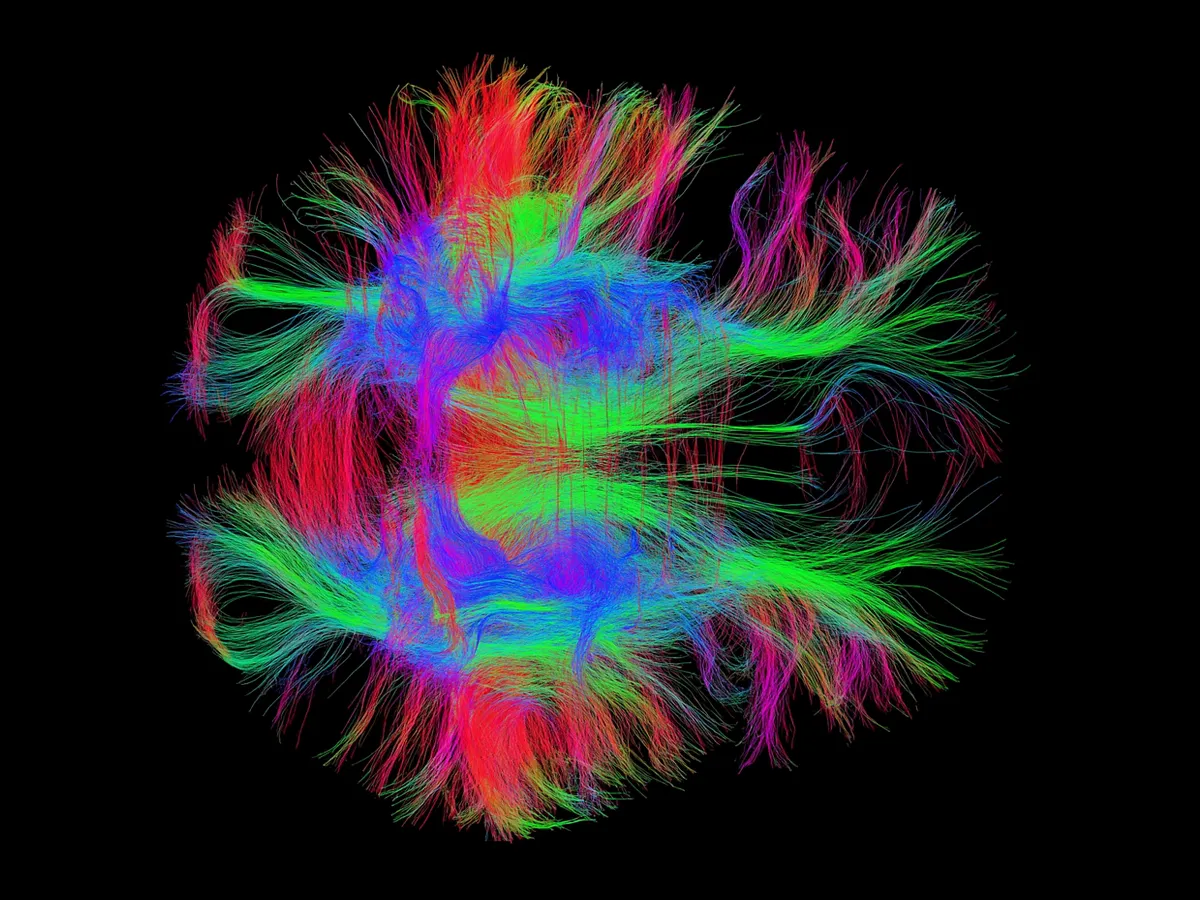
The human brain remains the most energy-efficient intelligent system known. With roughly 86 billion neurons, it supports continuous perception, learning, memory, and motor control on just ~20 W. This efficiency is structural, not incidental: computation, memory, and communication are deeply integrated, while a substantial share of the brain’s energy is spent on signaling and synaptic communication. These constraints have shaped neural systems toward sparse, parallel, and event-driven computation, in contrast to the separation of compute, memory, and communication that characterizes conventional computing architectures.
Photonic Architectures for Energy-Efficient & Scalable Intelligence
Modern computing follows a different path. Conventional electrical architectures separate computation, memory, and communication, making data movement increasingly dominant in the energy cost of AI. As models and accelerator systems scale, electrical interconnects face compounding constraints from resistance, capacitance, signal integrity, bandwidth density, and thermal dissipation. The resulting bottleneck is increasingly architectural rather than computational: moving information between increasingly distributed compute and memory can consume more energy than transforming it. Closing this gap between the demands of artificial intelligence and the physical limits of conventional computing is a defining challenge at the intersection of photonics, semiconductor engineering, advanced packaging, and machine learning.
Photonic computing offers a fundamentally different physical regime. Light can propagate with low loss, carry multiple channels through wavelength-divisionmultiplexing, and exploit interference, modulation, resonance, and propagation as computational primitives. This creates the possibility of treating communication and computation not as separate functions, but as complementary properties of the same physical substrate. Silicon photonics, integrated optical sources, photonic interposers, and programmable optical circuits are enabling increasingly dense integration of these capabilities at the chip and package level. At the same time, optical matrix multiplication and other analog photonic primitives demonstrate that computation itself can be performed through the physics of light rather than exclusively through electronic switching.
This research explores hardware–software co-design, treating photonic devices, computing architectures, and learning algorithms as one optimisation problem. At the physical layer, silicon photonics, optical sources, wavelength-division multiplexing, and interferometric circuits provide substrates where light performs both communication and computation. At the architecture layer,brain-inspired principles — parallelism, sparsity, locality, event-driven communication — map onto wavelength-parallel computation and distributed photonic interconnects.
At the systems layer, the focus shifts to photonic–electronic chip and package engineering: co-designing compute, memory, optical I/O, power delivery, thermal management, and learning under real constraints of energy, latency, precision, reliability, and manufacturability. The objective is a physical substrate for adaptive, intuitive, massively parallel intelligence — and establishing when light provides a fundamental advantage in intelligence per joule.
I believe the future of intelligence lies beyond scaling models—in understanding how biological systems compute, learn, and adapt under extreme energy constraints, and translating these principles into light-driven hardware. My goal is to build intelligent systems that learn continuously, process in parallel, and adapt efficiently by integrating photonics, neuroscience, and semiconductors.
CONNECT
Want to learn more? Get in touch.
I'm open to collaborating with founders, researchers, and engineers in building frontier technologies that expand human potential.